Global Minds, Local Roots
China’s "Learning Hub" programme seeks to forge globally competent youth before sending them abroad
Chengdu – May 18, 2025
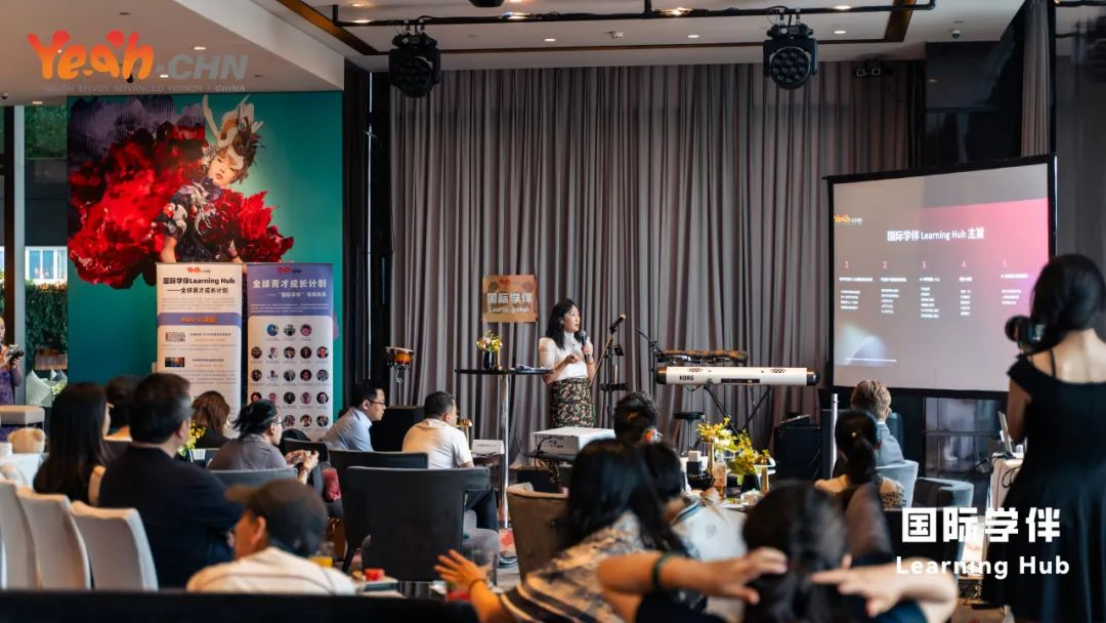
Saturday afternoon, Chengdu, a group of educators, policymakers, and Cambridge alumni gathered at the Niccolo Hotel to witness the launch of a programme that may quietly redefine China’s approach to international education. The Learning Hub, an initiative under the Global Talents Development Plan, promises a long-term academic partnership between China’s brightest pupils and current students or recent graduates from the world’s top universities—namely Oxbridge and the wider G5.
The premise is simple but ambitious: instead of brief cultural exchanges or exam-focused tutoring, Chinese students are paired with high-achieving counterparts abroad for years-long intellectual companionship. From middle school to university admission, these cross-border mentors advise on academic research, language proficiency, critical thinking, and even personal development and career planning. The result, its founders argue, is not merely a boost in admissions metrics but a fundamental recalibration of how global talent can be cultivated at home.
Dr. Gai Qiuyan, founder of the Yeah-CHN programme and a deputy secretary of China’s International Education Strategy Council, opened the launch by articulating the philosophical underpinning of the project: “True international education,” she noted, “is not about uprooting students, but about opening windows where they are.” The Learning Hub model aims to collapse the traditional barriers of geography and culture, creating instead a persistent, immersive environment in which Chinese pupils engage with global peers in English, across disciplines, and through meaningful collaboration.
This is not merely about learning from the West but learning with it. Guests from top Chengdu institutions—including Chengdu Shengfei School, Malvern College Chengdu, and Chengdu Foreign Languages School—emphasised the growing urgency for Chinese students to acquire “core international competencies”: cross-cultural communication, interdisciplinary collaboration, and adaptability in complex global environments. As one principal put it, “We are preparing students not just to apply to Cambridge, but to thrive once they get there.”
The project’s British co-founders, Cambridge engineering alumni Matthew Francis and George Lawn, were candid about the limitations of conventional international school pathways. “Admissions officers are not looking for neatly packaged candidates,” said Francis. “They want evidence of intellectual depth—students who’ve explored machine learning, or sustainability engineering, or literary criticism not because it was required, but because they were fascinated.”
George Lawn added that one of the key functions of the Learning Hub model is to help students build a coherent, long-term academic narrative: “Top universities are not just checking for grades—they’re looking for authentic signals of commitment and potential.”
To that end, the Learning Hub model places heavy emphasis on personalised mentorship and long-range planning. Students are encouraged to pursue research projects, competitions, and reflective writing alongside their academic studies—all under the guidance of their international partners. The hope is that by the time applications are submitted, the student’s story is not only impressive, but believable.
This emphasis on authenticity extends beyond academics. Several educators at the launch event recounted how participation in international study partnerships fostered emotional maturity and cultural fluency. Yan Jin, vice principal of Golden Apple School, shared an anecdote about a British mentor who, while learning about tangram puzzles during a workshop, expressed surprise that the game originated in China. “That moment,” she said, “reminded our students that their own culture is also a form of exportable knowledge.”
Similarly, schools reported that students who participated in the programme became better at managing culture shock, articulating their thoughts in nuanced English, and even challenging Western stereotypes of China. “These are not soft skills,” one speaker remarked. “They are essential 21st-century literacies.”
The challenge now is scale. International education in China has often been the preserve of elite bilingual schools or overseas programmes accessible only to the affluent. But as Lu Yang, curriculum director at Malvern College Chengdu, explained, the Learning Hub model is designed with scalability in mind. “This is not just for international schools. We are piloting integration with public schools, adapting to the local curriculum, and using technology to reduce costs.”
There are early signs of success. Graduates of schools piloting the model have already received offers from Cambridge, UCL, and other global institutions—not simply on the basis of scores, but portfolios that showcase well-roundedness, creativity, and civic engagement. Qingmiao School’s director Li Ke highlighted one student admitted to Cambridge who played piano competitively, volunteered in rural education, and published a personal essay on AI ethics—all while excelling academically. “Cambridge doesn’t want robots,” she said. “It wants humans who can think.”
For all the admissions talk, the deeper impact of the Learning Hub model may be in the habits it instills: curiosity, dialogue, and a grounded sense of global citizenship. In an age where cross-border misunderstanding is often the norm, such habits matter more than ever.
As Yang Zhengyi, a Tsinghua alumna and tech entrepreneur who also benefited from early international mentorship, told the audience: “What changed me wasn’t the information I received. It was the people I met—and the questions they taught me to ask.”
In that spirit, the Learning Hub programme is not merely a new lane to prestigious universities. It is a quietly radical idea: that the future of global education lies not in sending students away, but in bringing the world to them—and teaching them how to belong in both.