As the “2025 ‘Zhi-Xing china’ Italian University Students Exchange Program” continues, 48 Italian university students journeyed through Sichuan with two unforgettable cultural experiences that brought them closer to the essence of Chinese tradition, creativity, and ecological values. On March 23 and 24, guided by Polus International College, the group explored China’s intangible cultural heritage and visited the Chengdu Research Base of Giant Panda Breeding—two unique encounters with what many call “the treasure of China.”
From Lacquer Fans to Cheongsam Button-Making: Living Heritages in Bloom
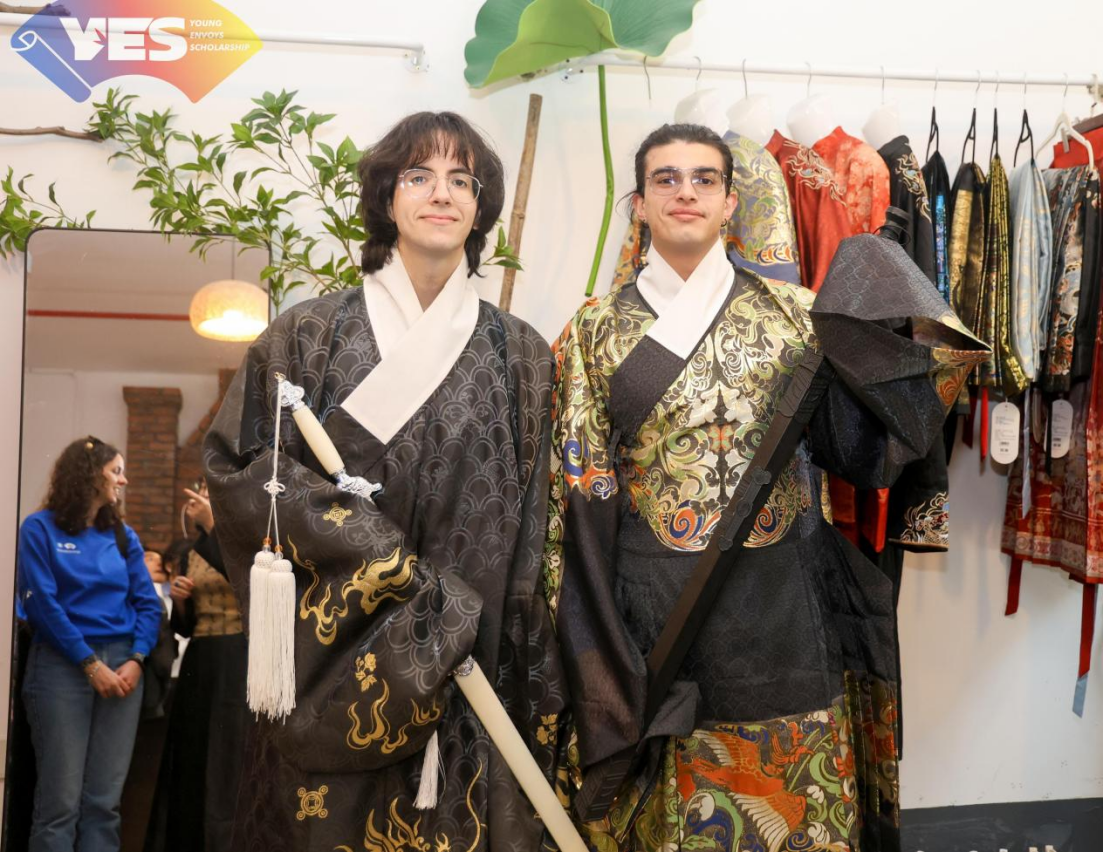
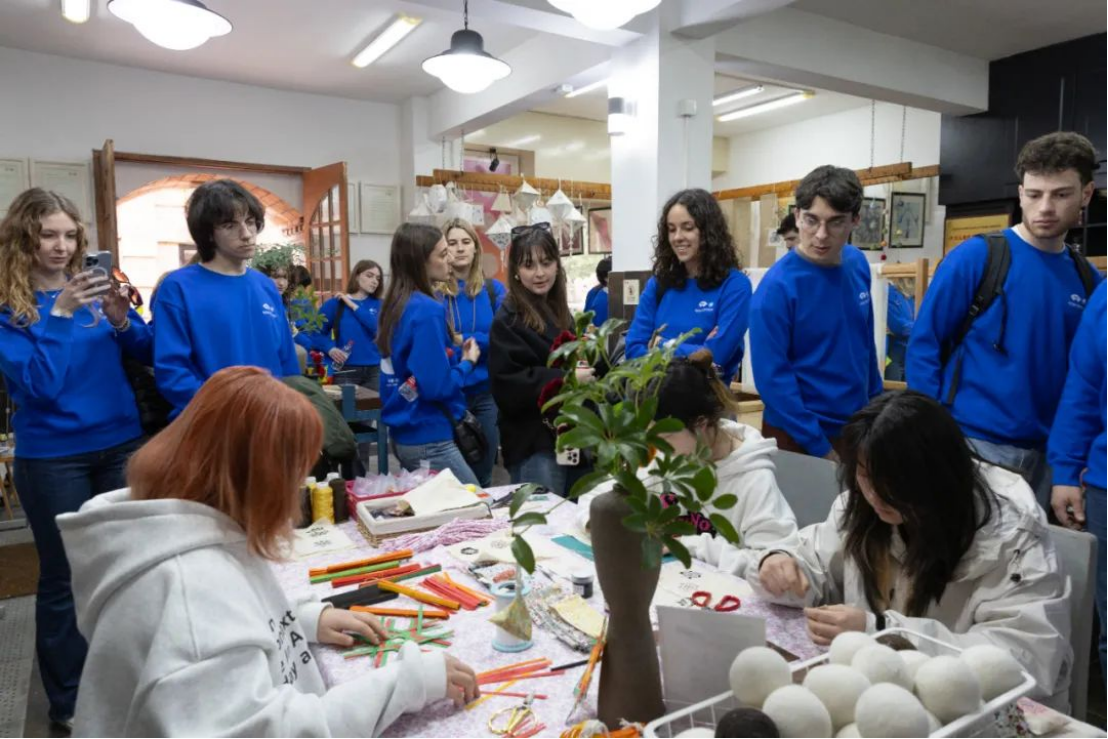
On the afternoon of March 23, the Italian students visited the campus of Polus International College, where they were welcomed into a series of hands-on workshops showcasing traditional Chinese craftsmanship. Guided by faculty and students, the guests explored spaces dedicated to classical western Sichuan furniture, Shu embroidery, traditional wellness practices, Hanfu design, ceramics, and creative visual design.
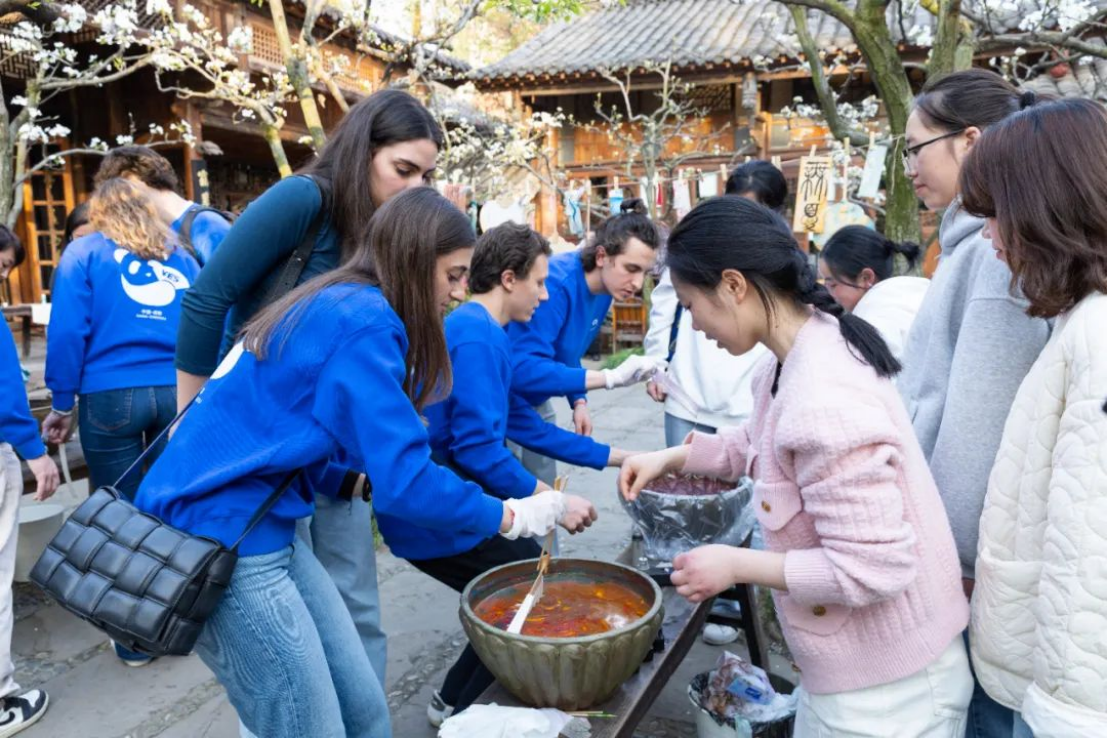
In the heart of the campus library, the group experienced a curated selection of intangible cultural heritage crafts. Among the highlights was the creation of floating lacquer fans, based on the ancient “drifting lacquer” technique. This time-honored process uses fluid paint and water to create marbled, ink-wash-like textures—each fan resulting in a one-of-a-kind art piece. More than just an aesthetic process, the lacquer tradition embodies patience, harmony with nature, and an appreciation of impermanence—values that resonated deeply with the visiting students.
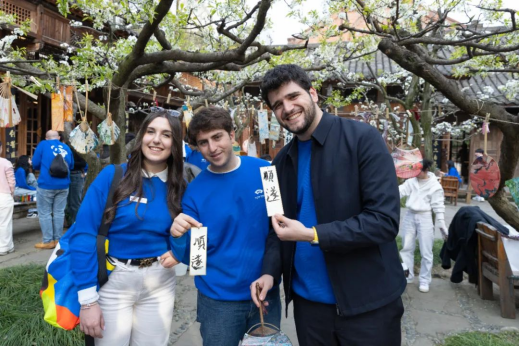
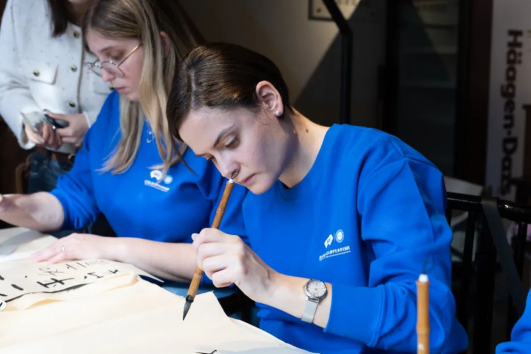
Students also tried their hand at calligraphy, learning the structure of Chinese characters and the delicate balance of brush, ink, and motion. In conversations with their Chinese peers, they explored how writing functions not only as a communication tool, but also as an art form with spiritual and philosophical dimensions.
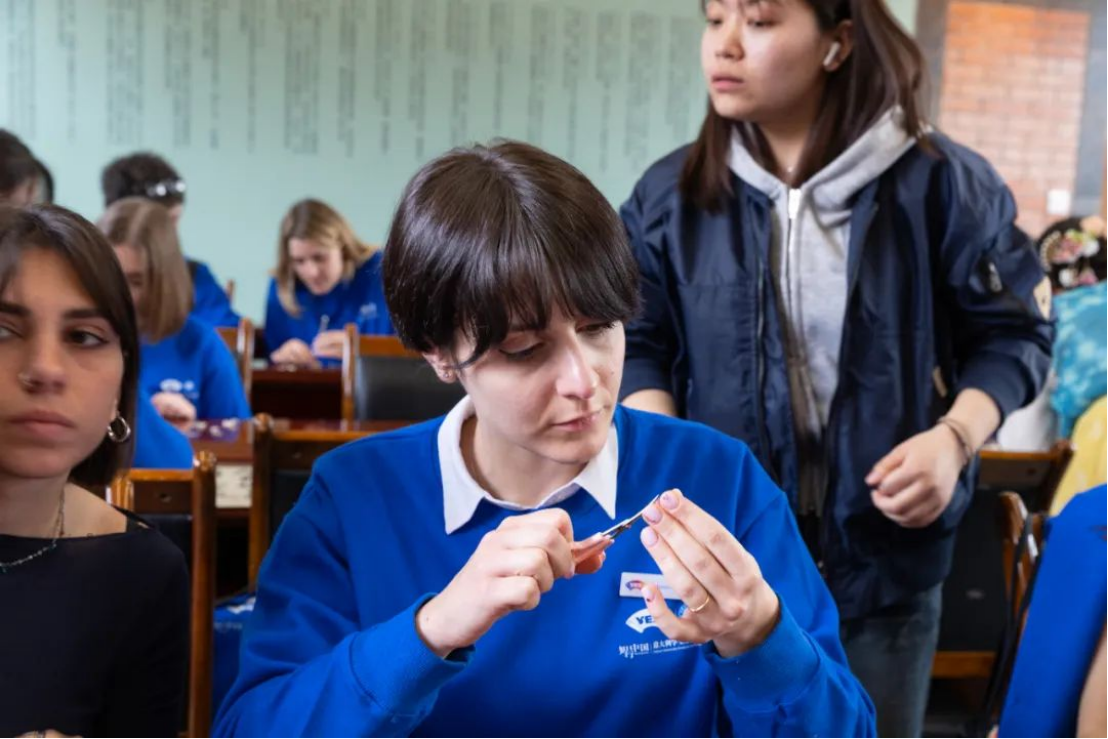
Finally, the cheongsam button-making workshop offered a window into China’s textile and fashion heritage. Cheongsam (qipao) buttons are more than fasteners—they’re miniature symbols of artistry and culture. The designs in this session were inspired by the spring blossoms on campus, allowing students to literally stitch their memories of the season into a piece of tradition.
Through these shared experiences, the Italian and Chinese students forged connections not only across borders, but across generations of cultural knowledge. For many, it was their first time engaging so intimately with heritage not confined to museums, but still evolving through young hands.
A Day with China’s Most Beloved Creature
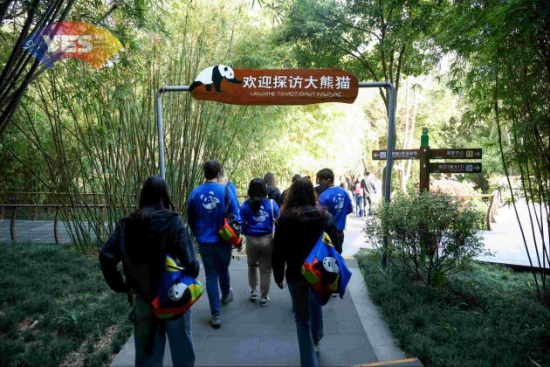
The following morning, the delegation visited the Chengdu Research Base of Giant Panda Breeding. The panda base, known internationally for its efforts in conservation, scientific research, and public education, serves as both a sanctuary and a symbol. For many students, it was their first time seeing pandas in real life—a long-held dream now fulfilled. Pietro, a student from the University of Palermo, arrived early with his camera in hand. “I couldn’t believe I was seeing a panda right in front of me,” he said. “It’s not just about how cute they are—being here, I really felt how much Chinese people value animals and the environment.”
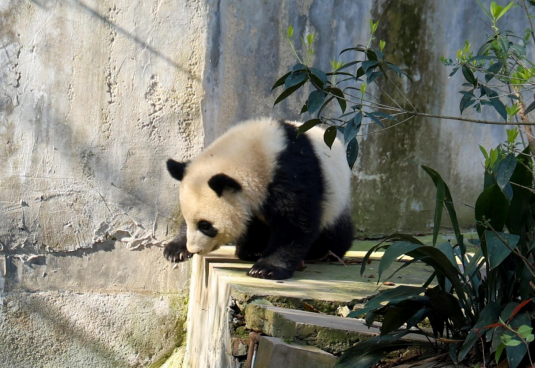
More than marveling at the cuteness of giant pandas and red pandas, the curious Italian visitors also delved into the history, conservation effort and cultural symbolism of these beloved creatures. Known as the national treasure of China, the giant panda has lived on Earth for at least 8 million years. It is often called a “living fossil,” having survived the Quaternary glaciation that wiped out most prehistoric species. Today, it is not only a global attraction but a symbol of global conservation efforts. As the flagship species for biodiversity protection, it serves as the face of the World Wide Fund for Nature (WWF), and its survival story reflects the delicate balance between nature and human care.
Thanks to decades of conservation work, the number of wild giant pandas has grown to nearly 1,900 as of January 2024. These peaceful, bamboo-loving animals now share our planet as both ancient survivors and cultural icons. As a global icon of peace, vulnerability, and environmental responsibility, they hold a special place not only in biodiversity efforts, but also in China’s cultural identity—an embodiment of gentleness and resilience.

Surrounded by bamboo groves and carefully preserved habitats, the students came to understand that protecting the endangered species is not simply a national goal, but a global responsibility.
A Shared Legacy of Care and Creativity
From the centuries-old techniques of lacquerware to the quiet strength of the panda, the two-day journey was more than a sightseeing trip—it was a lesson in what cultures hold dear.
Whether it is through craft, language, or conservation, these experiences revealed the values that transcend geography: beauty in detail, balance with nature, respect for the past, and curiosity for the future. The Italian students left each site not just with souvenirs, but with stories, emotions, and questions—what does it mean to preserve culture? How do we pass on what matters?
In a world where differences often divide, these moments of cultural encounter remind us that heritage—like the best of treasures—is meant to be shared.